
The best meal plan for seniors is one built around protein at every meal, plenty of vegetables and fruit, and a prep routine simple enough that you actually follow it. Muscle is the part of aging you can still do the most about, and food is half of that work. This guide gives you the targets, a sample week, a prep routine and budget tips. If you want the cooking done on paper, our High-Protein Meal Prep Playbook turns the same ideas into recipes and shopping lists.
TL;DR
- Aim for roughly 25 to 30 g of protein at each meal, spread across the day, rather than one big protein dinner.
- Build plates around lean protein, vegetables, fruit, whole grains and unsaturated oils, and plan the week with a shopping list.
- Start meal prep small: two or three dinners, plus staples like cooked grains, beans and hard-boiled eggs.
- Pair the plan with resistance training, which is the main signal that tells muscle to grow.
- Canned beans, frozen vegetables, eggs and dairy keep the plan affordable.
Table of Contents
- What a good senior meal plan has to do
- How much protein to plan for
- A sample seven-day meal plan
- Building your own week, step by step
- Weekly meal prep that stays safe
- Where Muscle Beyond 50 fits
- Eating well on a budget
- FAQ
- Sources
What a good senior meal plan has to do
A meal plan for someone over 50 has three jobs. It supplies enough protein to keep muscle. It delivers vitamins and minerals in fewer calories, because older adults generally need fewer calories but still need nutrient-rich food, according to the 2021 federal fact sheet for older adults. And it has to be easy enough to repeat every week.
That fact sheet lists fruits, vegetables, whole grains, protein foods, low-fat dairy or fortified soy, and unsaturated oils as the building blocks of an eating routine. It also notes that protein can help prevent muscle loss, and it points to seafood, soy, dairy, beans, peas and lentils as protein choices.
The National Institute on Aging adds that you should choose foods with little added sugar, saturated fat and sodium, and drink water. Its meal planning tips also stress that calorie needs vary from person to person. If you are making a major change to your weight or diet, talk with your doctor or a registered dietitian first, especially if you manage a condition such as diabetes, kidney disease or heart disease.
How much protein to plan for
Protein is the number most meal plans get wrong, usually by putting too little at breakfast and too much at dinner.
A peer-reviewed 2025 review on protein and aging reports suggested intakes of 1.0 to 1.2 g per kilogram of body weight per day for healthy older adults, and 1.2 to 1.5 g/kg for those with acute or chronic conditions. The same review describes about 25 to 30 g of protein per meal as a practical amount to maximize muscle protein synthesis, the process by which your body builds muscle, though it notes the evidence on how to distribute protein is not fully settled.
A worked example. A 170 lb (77 kg) adult in good health would multiply 77 by 1.0 to 1.2, which gives roughly 77 to 92 g a day. Split across three meals, that is about 25 to 30 g each, which lines up with the per-meal figure above. If you have kidney disease or another condition, ask your doctor what your target should be before raising protein.
What 25 to 30 g looks like on a plate:
- A three-egg vegetable omelet with a cup of Greek yogurt on the side.
- A palm-sized portion of cooked chicken or salmon plus a cup of lentils.
- A scoop of beans or tofu with quinoa and a glass of milk or fortified soy milk.
Our free Protein Cheat Sheet lists protein amounts for common foods so you can check your plates quickly.
A 2023 review on diet and sarcopenia (age-related muscle loss) makes the broader point: resistance training is the primary stimulus for building muscle, and adequate protein helps the muscle respond. A meal plan works best next to a strength routine, not instead of one.
A sample seven-day meal plan
The National Institute on Aging's sample menu gives a good template: a spinach, fruit and yogurt smoothie or a vegetable omelet with whole-grain toast at breakfast; chicken, tomato and avocado on whole-grain bread or quinoa with stir-fried vegetables at lunch; and roasted salmon with zucchini and sweet potato for dinner. We have built a week from that pattern, adding a protein anchor to every meal.
| Day | Breakfast | Lunch | Dinner |
|---|---|---|---|
| Mon | Vegetable omelet, whole-grain toast | Chicken, tomato and avocado on whole-grain bread | Roasted salmon, zucchini, sweet potato |
| Tue | Greek yogurt, berries, walnuts | Quinoa with stir-fried vegetables and tofu | Turkey meatballs with roasted vegetables |
| Wed | Spinach, fruit and yogurt smoothie | Lentil soup, side salad | Sheet-pan chicken with carrots and broccoli |
| Thu | Cottage cheese with sliced peaches | Leftover turkey meatballs in a whole-wheat wrap | Chickpea and cauliflower grain bowl |
| Fri | Vegetable omelet, fruit | Tuna salad on whole-grain bread, fruit | Shrimp fajitas with peppers |
| Sat | Oatmeal with milk and nuts, hard-boiled egg | Bean and vegetable chili | Salmon, broccoli, sweet potato |
| Sun | Scrambled eggs, whole-grain toast, tomato | Chicken and vegetable soup | Baked fish, brown rice, green beans |
Several of those dinners follow the sheet-pan ideas EatingWell published in 2025, including chicken with vegetables, a chickpea and cauliflower grain bowl, salmon with sweet potatoes and broccoli, turkey meatballs and shrimp fajitas. Sheet-pan cooking suits this stage of life: one pan, little cleanup, and a protein and two vegetables done together.
Adjusting the calories
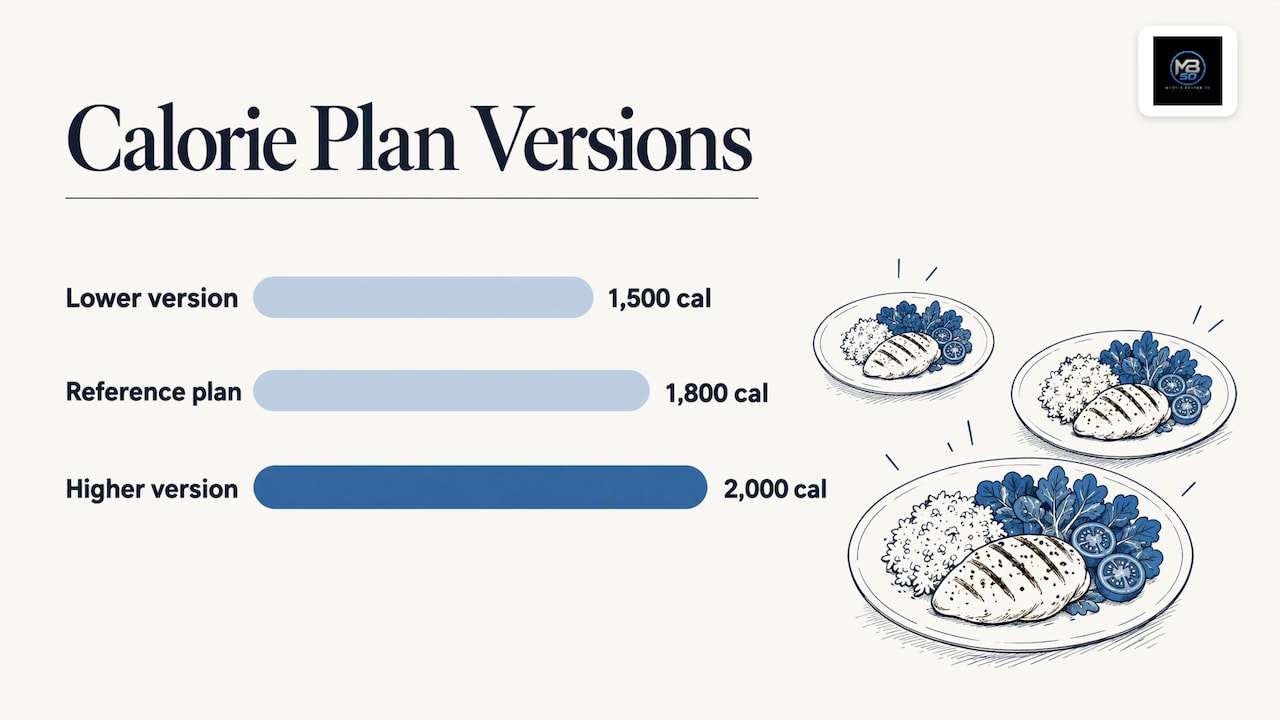
A plan's calorie level depends on your age, weight, height, sex and activity, per the federal guidance above. As a reference point, one published 30-day healthy-aging plan from EatingWell is set at 1,800 calories with 1,500 and 2,000 calorie versions, and supplies at least 85 g protein and 30 g fiber a day. Use it to see how portions scale, not as your personal number. If fat loss is the goal, keep protein steady and trim portions of starches and added fats first.
If you eat little or no meat
Beans, lentils, eggs, dairy, tofu and fortified soy milk all count toward your per-meal target. Our Vegetarian High-Protein Playbook is built for exactly that way of eating.
Building your own week, step by step
- Check what you already have. Look through the pantry, refrigerator and freezer, plan around items that need using, and move older items to the front, as Safefood's meal planning guidance advises. This is the cheapest step and the one people skip.
- Pick the protein first. Choose one protein for each meal, then add vegetables, fruit and a whole grain. The NIA's food-group guide suggests at least half of your grains be whole grains, and a mix of lean meat, poultry, seafood, eggs, beans, nuts, seeds and soy, in its food-group overview.
- Repeat favorites. Alternate familiar meals with one or two new recipes a week. Repetition cuts decisions and waste.
- Mind the prep time. Match recipes to your energy. A weeknight meal that takes 20 minutes will get cooked; a 90-minute one will not.
- Write the shopping list. The NIA recommends planning in advance, making a list to stay on budget, considering preparation time and choosing recipes that sound good to you. That last point matters: a plan you enjoy is a plan you keep.
Weekly meal prep that stays safe
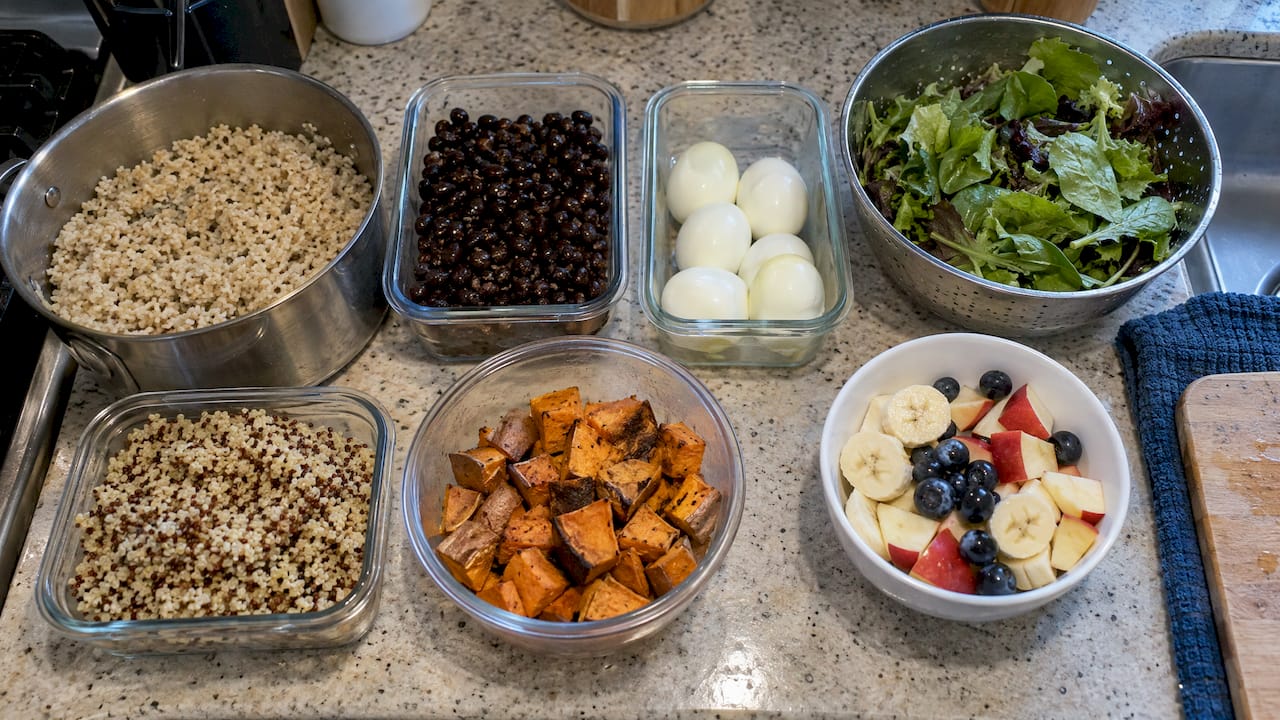
Harvard's Nutrition Source meal prep guide recommends starting small, such as preparing enough dinners for two or three days, and tailoring the method to your schedule and cooking skill. Good staples to batch: cooked grains and beans, washed greens, hard-boiled eggs and chopped fruit. Make extra portions to eat another day or freeze.
Safe storage matters more as we age, because food poisoning can hit harder. The same guide says to date and label stored food and to refrigerate cooked whole meat, fish, poultry, soups and stews at 40°F or lower for 3 to 4 days. Safefood's guidance is a little tighter, saying refrigerated leftovers should be used within three days. When in doubt, freeze portions on day one or two and eat the rest of the week from the freezer.
A simple Sunday routine:
- Cook a tray of chicken or fish and a pot of beans or lentils.
- Roast two trays of vegetables.
- Cook a batch of quinoa or brown rice.
- Boil six eggs.
- Portion into containers, label with the date, and freeze what you will not eat within three days.
Where Muscle Beyond 50 fits
Most people stall not on knowledge but on the daily question of what to cook. Our meal-prep and recipe playbooks are written for adults over 50 who want to build and keep muscle. The Quick-Start Meal Prep Playbook is the place to begin if you want a simple first week, and the High-Protein Meal Prep Playbook goes deeper on recipes. You can see everything in Guides & Playbooks.

If you want training and food together, the 30-Day Refuse to Decline Challenge is a one-off $149. To record the lifting that makes the protein count, the MB50 Training Log keeps your sessions in one place.
Eating well on a budget
A good plan does not need pricey ingredients. The British Columbia government's Healthy Eating for Seniors guide recommends planning around weekly specials, freezing extra portions, using canned or frozen produce in place of fresh, comparing unit prices, considering store brands and bulk foods, and buying only what you can use before it spoils. Its plate model, with vegetables and fruit filling at least half, is a handy check.
AARP's budget eating guide names canned beans, lentils, canned fish, grains and frozen produce as affordable staples and cites dietitians who recommend batch cooking and freezing portions to save time, money and waste.
The protein review mentioned earlier also lists barriers such as appetite changes, tooth loss, cost and social isolation. Eggs, whole-grain bread and dairy are economical ways to reach your protein target. If appetite is small, spread food into smaller, more frequent meals, and if chewing is hard, choose softer proteins such as eggs, yogurt, fish, cottage cheese and well-cooked beans.
If cost is a real barrier, the federal fact sheet points U.S. older adults to food programs and local aging agencies, which can help with groceries or meals.
FAQ
What should older adults include in their diet?
A variety from every food group: vegetables, fruit, whole grains, protein foods, low-fat dairy or fortified soy, and unsaturated oils. Include seafood, dairy, beans, peas and lentils for protein, and limit added sugar, saturated fat and sodium.
How much protein does a senior need per meal?
Published research describes about 25 to 30 g per meal as a practical target for older adults. Over a day, healthy older adults are advised about 1.0 to 1.2 g per kilogram of body weight. Check your target with your doctor if you have a medical condition.
How do I start weekly meal prep over 50?
Start with two or three dinners and a few staples such as cooked grains, beans and hard-boiled eggs. Label containers with the date, refrigerate cooked food at 40°F or lower, and freeze extra portions you will not eat within three or four days.
Can a meal plan help with fat loss?
Yes, when it keeps protein steady and trims portions of starches and added fats. Calorie needs differ by age, weight, height, sex and activity, so talk with your doctor or a dietitian before a major change.
Sources
- Healthy Meal Planning: Tips for Older Adults, National Institute on Aging
- Build a Healthy Eating Routine as You Get Older, ODPHP
- Healthy Eating As You Age: Know Your Food Groups, National Institute on Aging
- Protein and Aging: Practicalities and Practice, PMC
- Diet for the prevention and management of sarcopenia, Metabolism
- Sheet-Pan Dinners for Healthy Aging, EatingWell
- 30 Day High-Protein, High-Fiber Meal Plan for Healthy Aging, EatingWell
- How to make a meal plan, Safefood
- Meal Prep Guide, Harvard The Nutrition Source
- 25 Tips for Healthy Eating on a Budget, AARP